 Aurora
Partner mint API
Query upcoming, present and past Aurora mints, with phases, supply, chains and public artwork links.
On this page
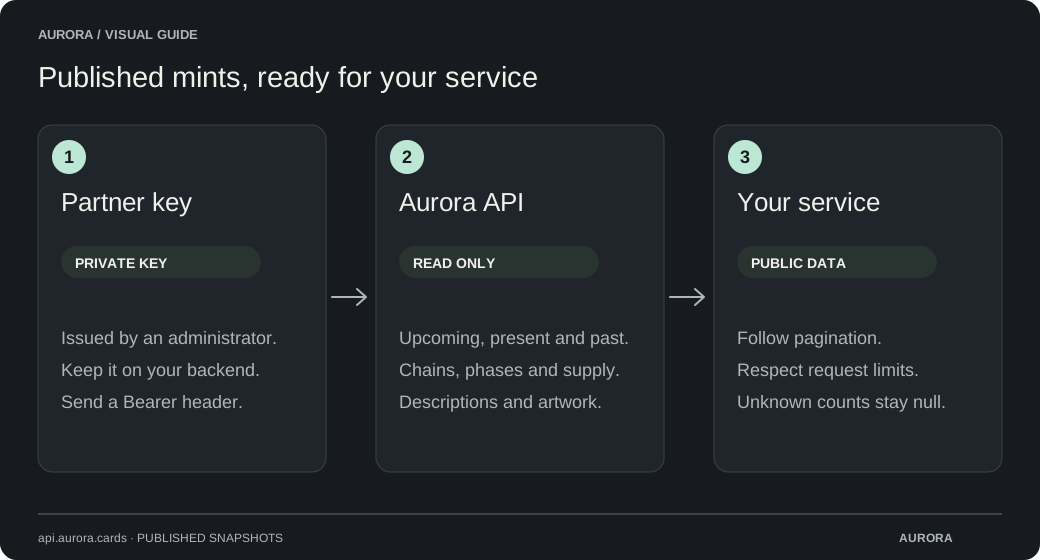
Connect your service
Use https://api.aurora.cards. Ask an Aurora administrator for a partner key. Send Authorization: Bearer YOUR_API_KEY from your backend. No wallet, signature or Premium membership is required. Keep the key out of URLs, browser code and public repositories; browser cross-origin access is not enabled.
Administrators create, view expiry and last use, and revoke keys in Admin → API Configuration → Partner API. Keys expire after 30, 90 or 365 days and are shown only once. To rotate, create a replacement, switch the integration, then revoke the old key.
curl 'https://api.aurora.cards/v1/mints?period=upcoming&chainId=1' \
  -H 'Authorization: Bearer YOUR_API_KEY'
Endpoints and filters
GET /v1/mints returns data[], pagination and generatedAt. GET /v1/mints/{id} returns one data object and generatedAt. Both include dataSource: published-snapshot. URL-encode the opaque id returned by the list; the detail route accepts no query parameters. GET / and GET /openapi.json are public and need no key. HEAD is supported; writes return 405.
Follow pagination.nextOffset until null. Data can change between requests, so deduplicate by id during longer crawls. Upcoming includes coming-soon previews; present includes live and paused mints; past includes ended and sold-out releases. current identifies the current release on a contract.
| Filter | Accepted values |
|---|---|
| period | all (default), upcoming, present, past |
| chainId | Optional positive integer chain ID |
| q | Collection name, address or chain; maximum 100 characters |
| limit | 1–48; default 24 |
| offset | 0–1,000,000; default 0 |
Collection details and artwork
Dates are UTC ISO 8601. Null phase start means immediate and null end means no scheduled end. price contains baseUnits, formatted, currency and decimals; baseUnits is a decimal integer string. Prices exclude additional platform fees and gas. A zero walletLimit means no configured limit at that level. Keep large quantities as strings or BigInt.
| Field | Meaning |
|---|---|
| id / collectionKey / current | Stable release identity, chain/collection identity and current-release marker |
| name / description / kind | Public collection details; kind is nft or collectibles |
| chain | Numeric id, name, currency and decimals |
| contractAddress / contractType / standard | ERC721C, ERC1155C or AuroraCollectibles; underlying standard is ERC721 or ERC1155 |
| images.pfp / banner / social | Absolute public artwork links on aurora.cards; may use a published placeholder |
| links | Mint page plus available website, X, Discord and Telegram URLs |
| supply | maximum, minted, remaining and unit; quantities are decimal strings or null |
| phases | Every published phase with name, status, UTC start/end, price, access, walletLimit, supply and minted counts |
| phases[].pack | Pack id, name and openingStartsAt, or null for direct items / NFT releases |
| verified / updatedAt | Published verification flag and saved-record time; neither is a live blockchain guarantee |
Understand supply and availability
The feed reads published snapshots and performs no blockchain requests on behalf of the partner. generatedAt is the response time, not the time of a chain read. Refresh the linked mint page before a purchase. Null minted or remaining means unknown, not zero; null maximum means no configured cap.
NFT counts describe one release, not lifetime collection supply. Collectibles use sale-units: published allocations can mix sealed packs and direct items. Their minted and remaining counts are currently null, and status follows the published schedule. Do not treat sale-units as unique card supply.
Historical NFT releases remain visible after a new release starts. Collectibles expose their currently published sale configuration, not an archive of removed sales. Only public listed mints appear. Hidden collections, drafts, private allowlists, proofs and unrevealed artwork are excluded. Missing and hidden details both return 404.
Rate limits and errors
Each key allows 60 requests per minute; a separate IP limit of 120 per minute also covers public endpoints. Successful authenticated responses include X-RateLimit-Limit, X-RateLimit-Remaining and X-RateLimit-Reset (Unix seconds). On 429, wait for Retry-After before retrying. Responses use Cache-Control: no-store.
Errors use {error: {code, message}}. Invalid filters may also include error.fields. Handle 400 INVALID_REQUEST, 401 UNAUTHORIZED, 404 NOT_FOUND, 405 METHOD_NOT_ALLOWED, 429 RATE_LIMITED and 503 TEMPORARILY_UNAVAILABLE. Expired or revoked keys return 401; the API cannot mint, trade or change account settings.